
Outdoor Event Audio: Coverage, Weather, and Site Planning
Good outdoor sound depends on how the audio system fits the audience area—and everything happening around it.
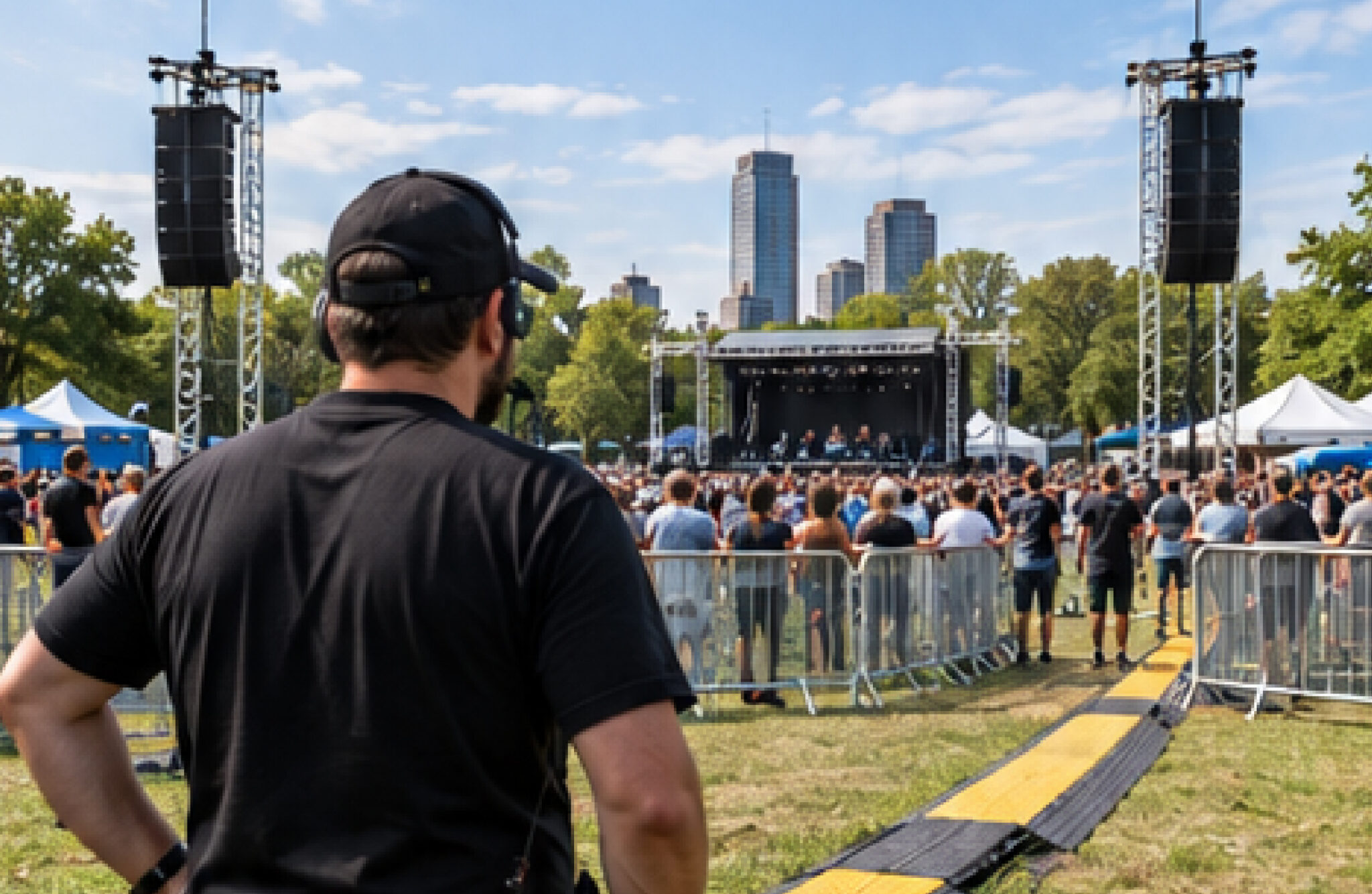
An open lawn, a city street, and a waterfront venue each present different audio challenges. Audience layout, background noise, nearby buildings, and weather conditions all influence how sound reaches listeners.
Planning outdoor event audio means accounting for those conditions while coordinating speaker locations, power, and cable routes with the rest of the production.
THE QUICK ANSWER
Start with a site plan showing the stage, audience boundaries, nearby properties, and available infrastructure. Design coverage around the listening area, then coordinate equipment protection, power distribution, and weather response with your production team.
Three site conditions that shape outdoor sound
Audience width and depth. A crowd spread across a wide lawn needs different coverage than one extending down a narrow street. Side areas and overflow seating may need additional speakers.
Background noise. Traffic, generators, vendors, and neighboring activities can compete with speech and music. Their locations matter when positioning the stage and audience.
Nearby properties and reflective surfaces. Residences, offices, and building façades can influence speaker aiming and operating levels. Share venue sound restrictions early.

Plan coverage before finalizing the layout
Stage orientation affects where sound travels. Review it alongside audience sightlines, entrances, vendor locations, and nearby sound-sensitive areas before the site layout is locked.
A deeper audience may benefit from delay speakers. Wide seating areas or spaces near the stage may need fills. Reserve room for those positions, including their supports and any separation needed from public traffic.
Turning up the main system cannot solve every coverage gap. Speaker placement and aiming should address the actual audience footprint.
Build weather response into the production plan
Rain protection needs to suit the equipment while allowing required ventilation and access. A stage roof alone does not protect every speaker, connection, or control position from wind-driven rain.
Wind and changing atmospheric conditions can also affect coverage across longer distances. Your audio team should have time to check the system and monitor performance as conditions change.
Coordinate weather monitoring, operating limits, and decisions about pausing or shutting down with the responsible production leads. Equipment supports and temporary structures need their own appropriate planning and oversight.
Coordinate power, cables, and access
Confirm power sources and distribution routes before equipment arrives. Audio requirements should be coordinated with lighting, video, vendors, and other site users.
Cable paths need to account for pedestrian crossings, vehicle access, and emergency routes. Control positions also need a useful listening location, suitable protection, and reliable communication with the stage.
What to share with your audio team
A scaled site plan and expected audience footprint
Program details and event operating hours
Power locations and generator plans
Vendor areas, traffic routes, and nearby properties
Venue sound restrictions and monitoring requirements
Weather procedures and available setup time
Planning sound for an outdoor event?
We can help evaluate your site, plan audience coverage, and coordinate audio with the wider production. We support outdoor concerts, festivals, commencements, and community events throughout Baltimore, Washington, D.C., and Virginia.