
Wireless Microphone Planning for Panels and Presentations
Clear conversations depend on having the right microphones, a workable handoff plan, and someone managing the mix.
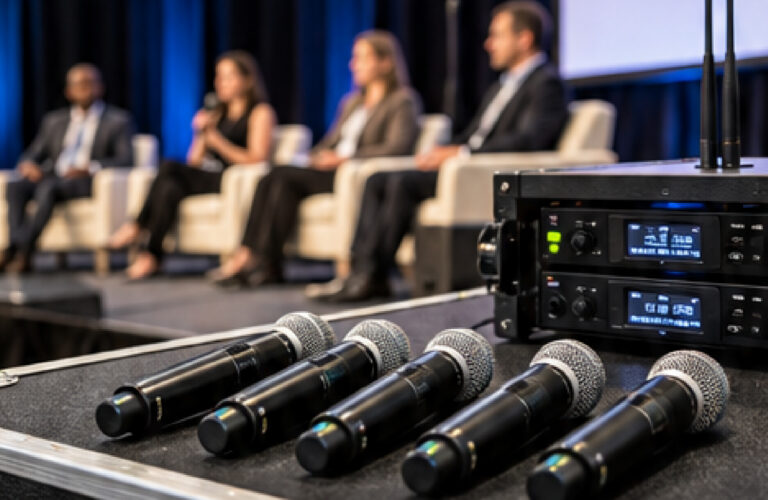
Wireless microphones give presenters freedom to move and help panels transition between speakers. But choosing handhelds, lavaliers, or headsets is only one part of the plan.
Your audio team also needs to know how many people will speak at once, how audience questions will work, and what happens between sessions. Those details shape equipment selection, staffing, and rehearsal time.
THE QUICK ANSWER
Plan wireless microphones around the maximum number of simultaneous users, how each person will present, and how microphones will move between sessions. Include time for fitting, soundchecks, frequency coordination, and battery checks.
Choose microphones around how people will speak
Handheld microphones work well for moderators, interviews, and audience questions. They are easy to pass between speakers, but users need to keep them close to their mouths.
Lavalier microphones clip to clothing and leave hands free. Clothing, jewelry, and placement can affect sound, so presenters need time for fitting and a check.
Headset microphones keep the microphone close to the mouth as a presenter moves or turns. They can suit active presentations, demonstrations, and speakers who need both hands.
Presenter preference matters, but it should be considered alongside room conditions and the level of speech reinforcement required.

Count simultaneous users, then plan the transitions
A six-person panel with a moderator may need seven microphones available at once. Sharing fewer microphones can work for some formats, but it changes the pace of the conversation and requires deliberate handoffs.
Back-to-back presentations create another consideration: the next speaker may need to be fitted and checked while the current presenter is still onstage. Equipment counts should account for that overlap.
Audience questions need their own plan. Decide whether guests will approach a fixed microphone or whether staff will carry handhelds through the room.
Wireless reliability needs preparation
Wireless microphones share radio spectrum with other equipment. Your audio team needs to select compatible frequencies and check conditions at the venue, especially when several rooms or production teams are operating nearby.
Battery management, receiver placement, and a backup microphone also belong in the plan. A spare should be ready to use, with someone assigned to get it to the speaker.
During the session, an audio operator manages microphone levels and mutes unused channels to help maintain clarity and reduce unwanted noise.
What to share with your audio team
Bring these details into the planning conversation:
Maximum number of simultaneous speakers
Panel formats, moderator roles, and audience Q&A plans
Presenter movement, demonstrations, and microphone preferences
Session timing and opportunities for microphone fitting
Recording, livestream, and remote participant requirements
Other rooms or teams using wireless equipment
Planning a panel or presentation?
We can help plan microphone selection, presenter transitions, and audio support for your program. We provide event audio production throughout Baltimore, Washington, D.C., and Virginia.